Ask how fast a boat is going and a sailor will answer in knots – not km/h or mph. If you've ever wondered what "we're doing 6 knots" actually means, here's the simple answer: 1 knot = 1.852 km/h (about 1.15 mph). Below you'll find an easy conversion table, a quick way to estimate it in your head, and why sailors stubbornly stick to knots.
What is a knot?
A knot is one nautical mile per hour. And a nautical mile isn't arbitrary: it equals one minute of latitude – 1/60th of a degree – which is why it's so useful at sea. One nautical mile is 1.852 kilometres, so one knot is 1.852 km/h. The word itself comes from the old practice of counting knots in a rope streamed behind the ship to measure its speed.
Knots to km/h conversion table
| Knots | km/h | mph |
|---|---|---|
| 1 | 1.9 | 1.2 |
| 2 | 3.7 | 2.3 |
| 3 | 5.6 | 3.5 |
| 5 | 9.3 | 5.8 |
| 6 | 11.1 | 6.9 |
| 8 | 14.8 | 9.2 |
| 10 | 18.5 | 11.5 |
| 15 | 27.8 | 17.3 |
| 20 | 37.0 | 23.0 |
| 25 | 46.3 | 28.8 |
The quick mental trick
For a fast estimate, double the knots and add about 10 % to get km/h. So 6 knots → 12, plus a bit → roughly 11 km/h. Close enough for everyday use. For mph, knots and mph are almost the same – just add roughly 15 %.
How fast does a sailing yacht actually go?
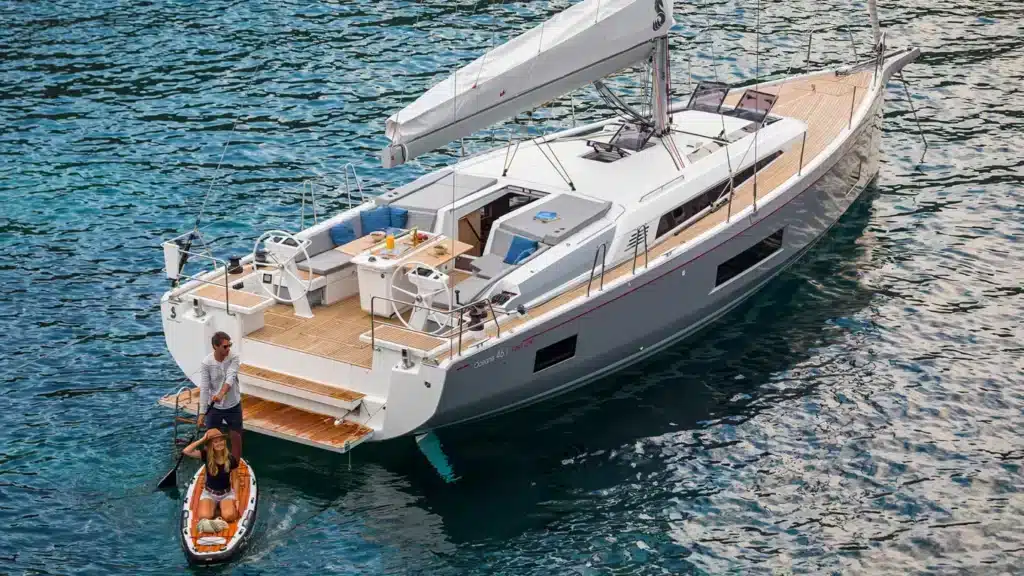
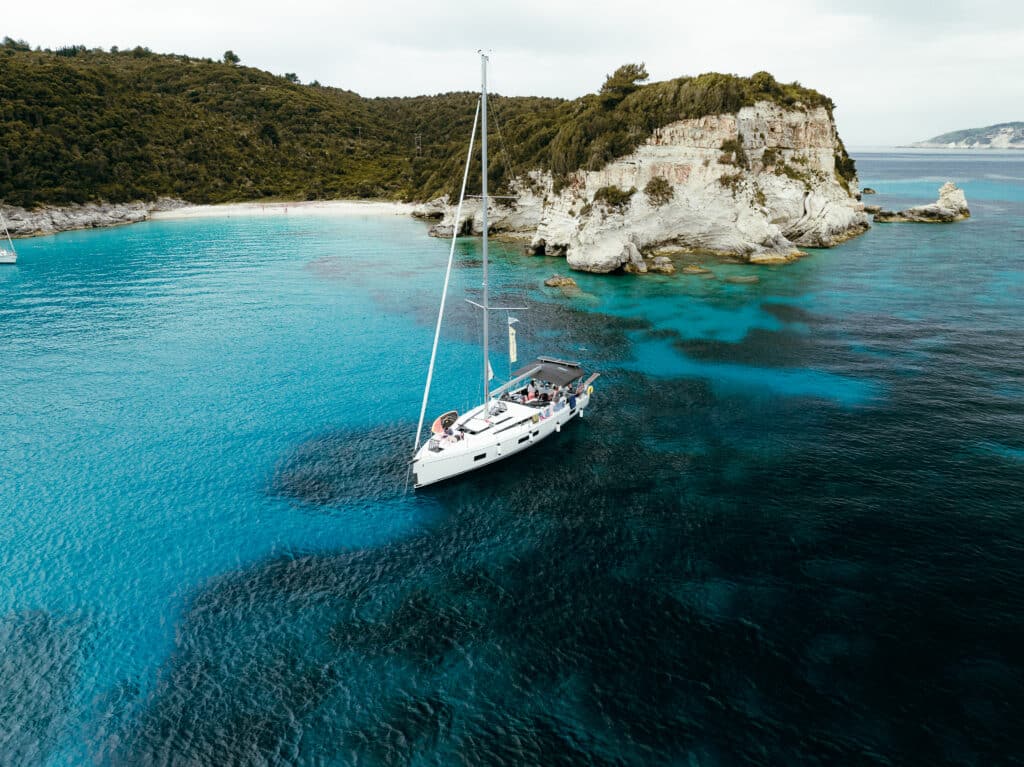
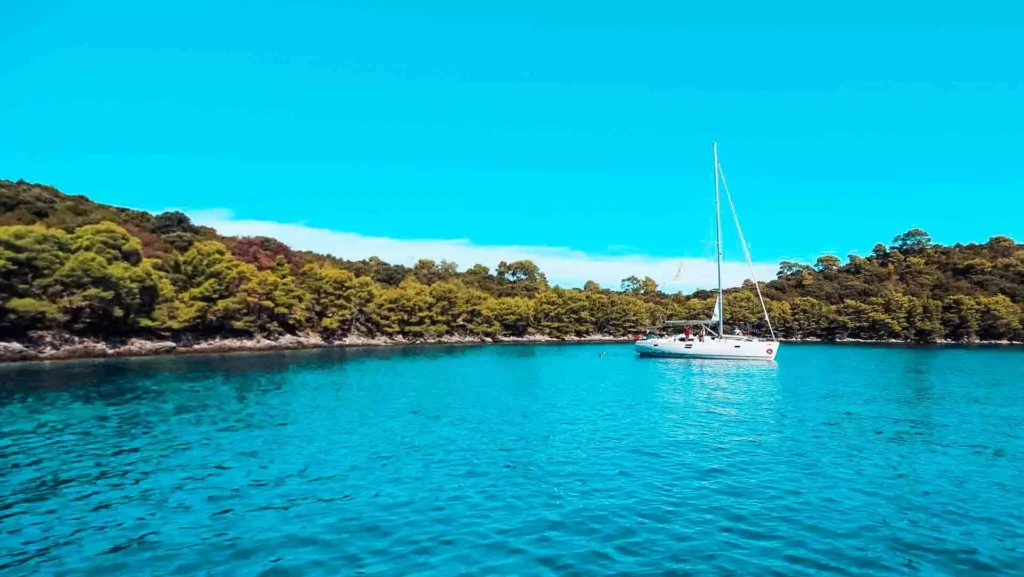
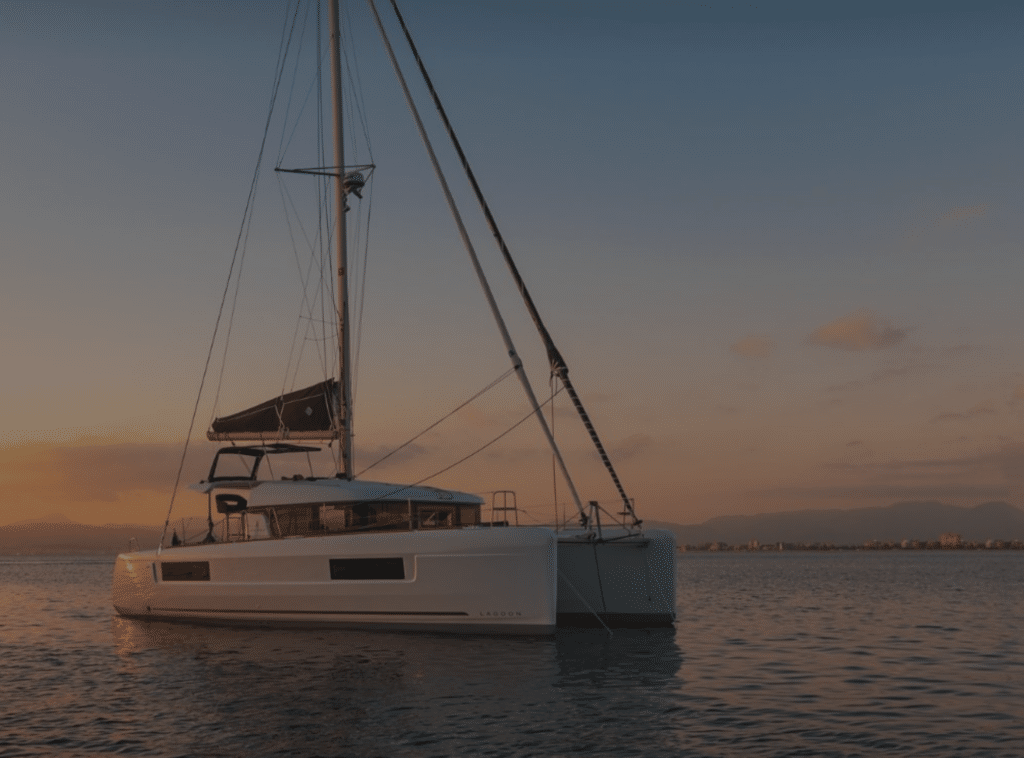
Cruising yachts are not fast by car standards – and that's the whole point. A typical monohull sails at 5 to 8 knots (roughly 9–15 km/h); a performance catamaran can hit double figures in a good breeze. Wind strength drives it all, which is why sailors read the Beaufort scale so closely: more wind (up to a point) means more speed. At a gentle 6 knots you cover a lot of coastline in a day while still having time to swim and explore.
Why do sailors use knots?
Because it makes navigation elegant: since one nautical mile is one minute of latitude, speed in knots ties directly to the chart. Aviation uses knots for the same reason. It's a global standard at sea, so wherever you sail, "knots" means the same thing. Curious about more sailing basics? Our sailing wiki has you covered.
Fancy feeling 6 knots under sail for yourself? Browse our sailing trips and come aboard.
Frequently asked questions
How many km/h is 1 knot?
Exactly 1.852 km/h, which is about 1.15 mph. It comes from one nautical mile (1.852 km) per hour.
How fast is 10 knots in km/h?
10 knots is 18.5 km/h (about 11.5 mph) – a brisk pace for a cruising yacht.
Why is speed at sea measured in knots?
Because one nautical mile equals one minute of latitude, so speed in knots links directly to the navigation chart. It's the international standard at sea and in the air.
Conclusion
One knot is 1.852 km/h – and once you know that, "we're doing 6 knots" makes perfect sense. It's a gentle, wind-driven pace that's all about the journey. Ready to feel it? Discover our sailing trips.