Understanding the points of sail is the single biggest "aha" moment for any new sailor. Once you grasp how a boat's course relates to the wind, everything else – steering, trimming the sails, tacking – suddenly makes sense. The points of sail are simply the different angles a boat can sail relative to the wind, and there are only a handful to learn. Here they are, in plain language.
What are the points of sail?
Imagine the wind coming from 12 o'clock. As you turn the boat away from the wind, you pass through each point of sail in turn. A sailboat can sail towards the wind – just not directly into it – and the sails are trimmed differently at each angle.
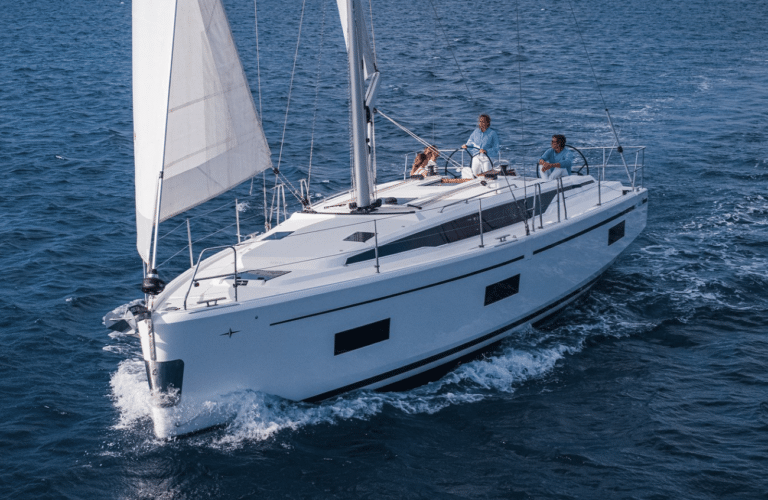
- Into the wind (the "no-go zone" / in irons) – roughly 45° either side of the wind. A boat can't sail here; the sails just flap. Try to point too high and you'll stall.
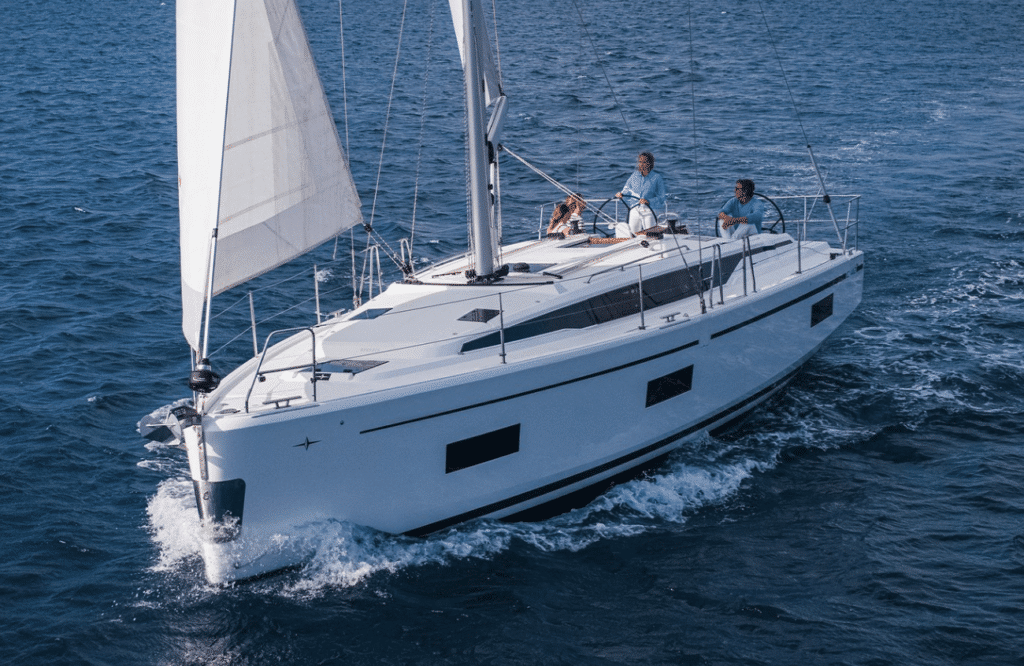
- Close-hauled – sailing as close to the wind as possible (about 45°), sails pulled in tight. This is how you make ground upwind, by zig-zagging.
- Close reach – a little further off the wind; sails eased slightly. Fast and comfortable.
- Beam reach – wind straight across the side of the boat (90°). Usually the fastest, easiest and most enjoyable point of sail.
- Broad reach – wind coming over the back corner; sails well eased. Relaxed and quick.
- Running – sailing directly downwind, sails right out. The wind pushes you along, though it can feel deceptively calm.
Tacking and gybing
Because you can't sail straight into the wind, reaching an upwind destination means tacking – zig-zagging close-hauled, turning the bow through the wind each time. Turning the other way, with the stern passing through the wind while sailing downwind, is a gybe – done carefully, as the sail swings across. These two manoeuvres, plus the points of sail, are the core of how a boat gets anywhere.
Why it matters
Knowing the points of sail tells you two things instantly: whether a destination is reachable in a straight line or needs tacking, and how to set the sails for the angle you're on. Trim them too tight on a reach and you lose speed; too loose upwind and they flap. It's the foundation that connects the wind, the sides of the boat and the strength of the breeze into one coherent picture. Our sailing wiki builds on it.
The points of sail click instantly on the water. Feel them for yourself on a skipper training week.
Frequently asked questions
Can a sailboat sail directly into the wind?
No. There's a "no-go zone" of about 45° either side of the wind. To go upwind you tack – zig-zagging close-hauled with the bow passing through the wind.
What is the fastest point of sail?
Usually the beam reach – wind across the side of the boat – which is also the easiest and most comfortable for most yachts.
What is the difference between tacking and gybing?
Tacking turns the bow through the wind (used upwind); gybing turns the stern through the wind (used downwind), with the sail swinging across the boat.
Conclusion
From close-hauled to running, the points of sail are the map that connects your course to the wind – and once they click, sailing makes sense. Ready to feel them? Learn hands-on with a skipper training week.