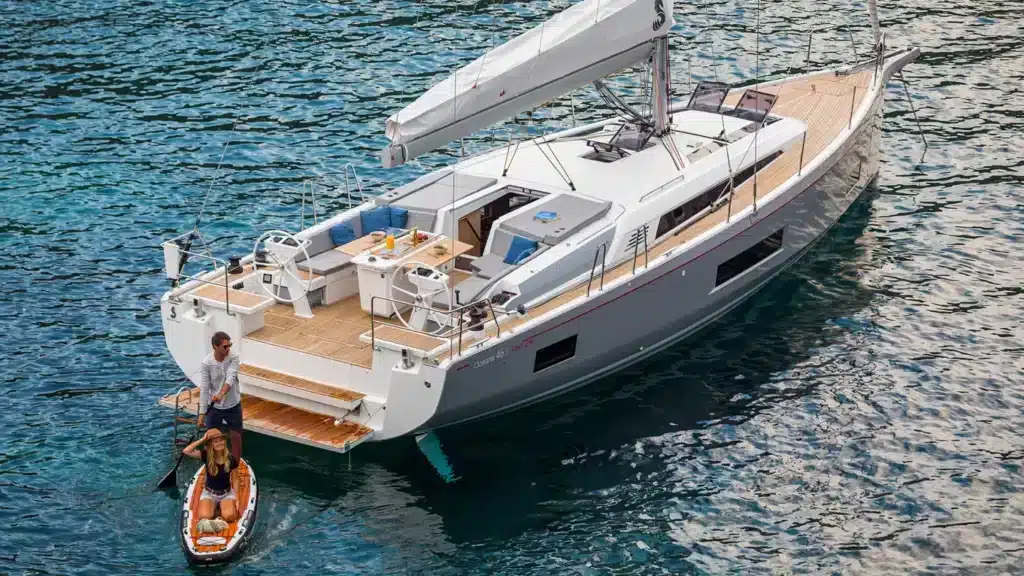
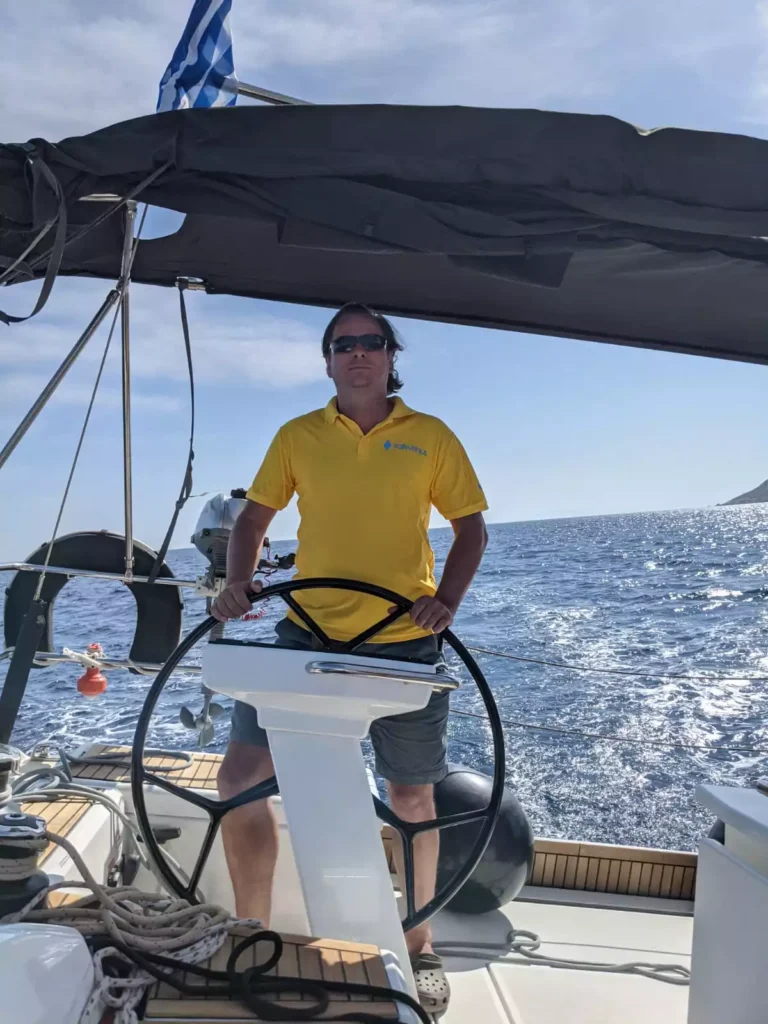
Sailing the Canary Islands is the answer to a sailor's winter dream: while northern Europe shivers, this Atlantic archipelago off the coast of Africa basks in warm sunshine, steady trade winds and 20 °C days – all year round. Volcanic peaks plunge into a deep blue ocean famous for whales and dolphins, and each island has its own dramatic character. It's bucket-list ocean sailing with an eternal-spring climate, and no experience is needed to join.
Year-round sailing in eternal spring
The Canaries' biggest draw is the climate: warm and sunny even in December and January, when the Mediterranean season is long over. That makes it the perfect winter escape and a genuine 12-month cruising ground. The reliable northeasterly trade winds give consistent, exhilarating sailing, and the deep Atlantic water between the islands is one of the best places in Europe to see whales and dolphins – often right from the deck.

The islands
- Tenerife – the largest island, crowned by Spain's highest peak, Mount Teide, and the usual starting point.
- La Gomera – wild and green, with ancient laurel forests and deep palm-filled ravines.
- La Palma – "La Isla Bonita", lush, volcanic and famous for its star-filled skies.
- El Hierro – the smallest and most remote, a UNESCO biosphere reserve with superb diving.
- Gran Canaria, Lanzarote & Fuerteventura – from beaches to Mars-like volcanic landscapes.
Dreaming of winter sun under sail? Discover our Spain & Canaries sailing trips.
A classic western-islands route
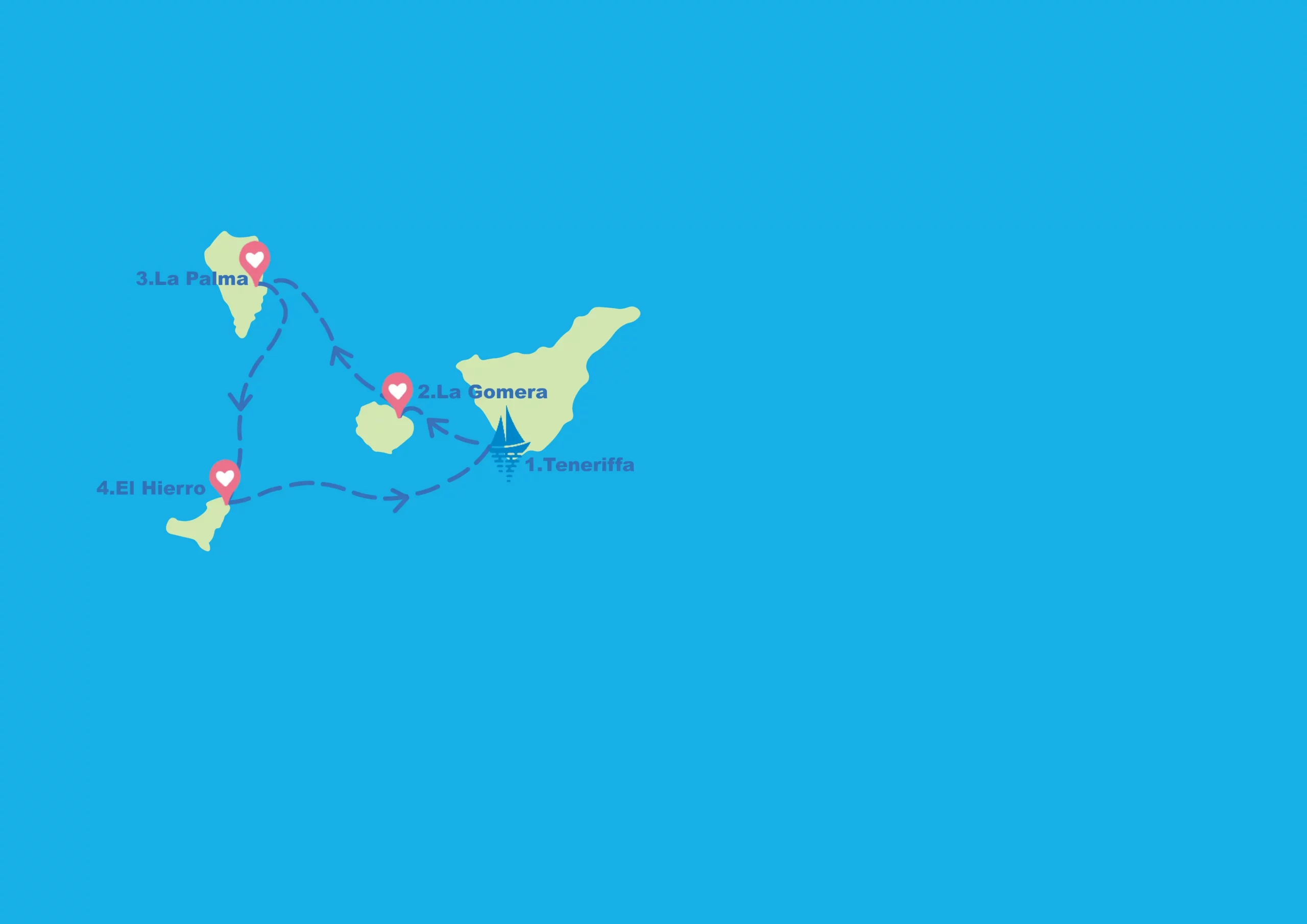
A popular route sails the western group: Tenerife – La Gomera – La Palma – El Hierro and back, with longer, open-water passages than the Mediterranean and the real feel of ocean sailing. The trade winds make for fast, downwind fun, and a skipper handles the Atlantic swell and the longer legs.
Best time to sail the Canaries
Genuinely all year. Winter (November to March) is mild, sunny and a wonderful escape from the northern cold; spring and autumn are warm and pleasant; summer is hot with the strongest trade winds. Unlike the Mediterranean, there's no closed season here.
Frequently asked questions
Can you sail the Canary Islands in winter?
Yes – that's the main appeal. The Canaries are warm and sunny even in December and January, making them a perfect winter sailing escape when the Mediterranean season is over.
Is sailing the Canaries different from the Mediterranean?
Yes – it's ocean sailing, with longer open-water passages, Atlantic swell and steady trade winds, plus superb whale and dolphin watching. A skipper handles the more demanding conditions.
Do I need experience to sail the Canaries?
No – on a shared trip a professional skipper handles the ocean passages, so beginners can enjoy the trade-wind sailing without any licence or experience.
Conclusion
Warm winter sun, steady trade winds, whales off the bow and dramatic volcanic islands – sailing the Canary Islands is the ultimate year-round ocean escape. Ready to chase the sun? Explore our Spain & Canaries sailing trips.